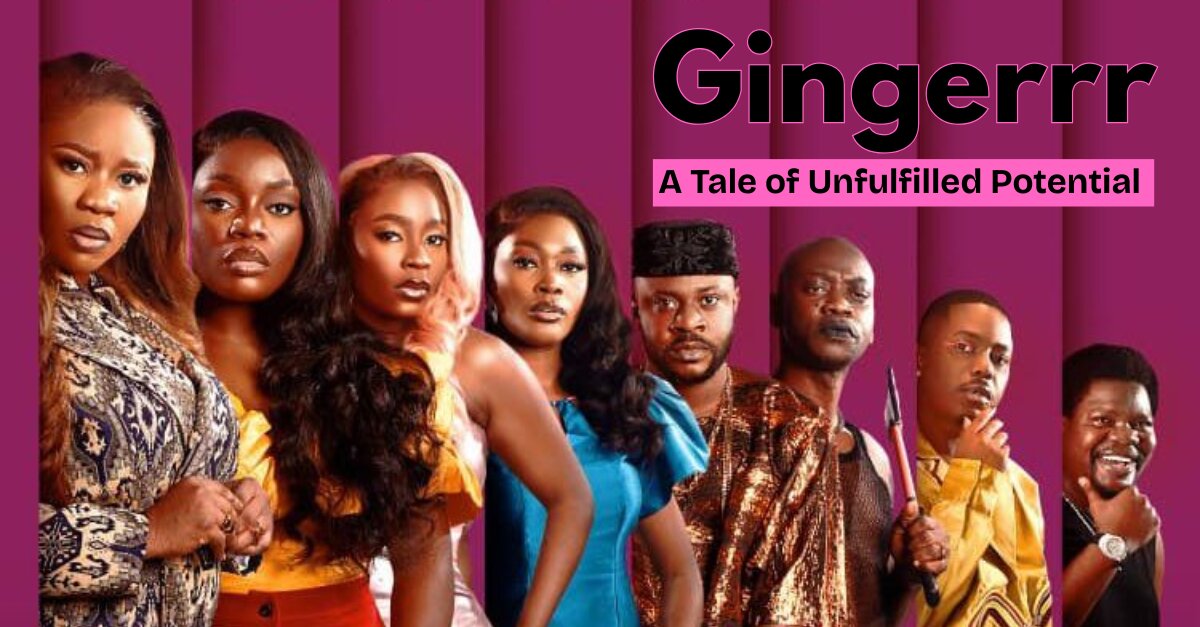
Gingerrr is one of those films that leaves you frustrated because you can clearly see the potential inside it. The ingredients were there: a stacked cast, stylish visuals, energetic pacing, strong production design, and a genuinely interesting premise about desperate women pulled together by crime, survival, and betrayal. But somewhere between the ambition and the execution, the film loses control of itself.
The film constantly explains itself instead of trusting the audience to observe and interpret. Almost every emotional beat, conflict, betrayal, or character intention is announced directly through dialogue. Characters rarely behave naturally; instead, they speak like people summarising the plot to viewers. It creates this strange feeling where the audience is always being informed rather than immersed.
A lot of scenes feel like:
“Here is what this character wants.”
“Here is why they are angry.”
“Here is the twist.”
“Here is the betrayal.”
Then immediately after that exposition dump, the movie gives us gorgeous cinematography and stylish movement. So visually, the film often looks cinematic, but dramatically, it feels flat because the dialogue already killed the tension before the scene even had a chance to breathe.
That is why some very talented actors end up looking ordinary at certain moments. Not because they suddenly forgot how to act, but because the script gives them little room for subtext. Great actors thrive on implication, silence, reaction, contradiction, and emotional layering. Gingerrr rarely allows that. Everyone says exactly what they mean almost all the time.
It honestly starts feeling less like a crime thriller and more like a documentary reenactment where people are narrating their motivations while events happen around them.
The frustrating part is that the filmmakers clearly knew how to make scenes look good. The camera work is excellent in many places. The lighting is stylish. The set design feels rich and textured. Certain locations give the movie scale and personality. The aesthetic ambition is obvious. But beautiful shots cannot permanently hide structural storytelling issues.
Another major issue is the overcrowding of the narrative. There is simply too much happening.
The film keeps introducing subplots, side characters, betrayals, hidden agendas, criminal politics, emotional histories, and sudden reveals without giving enough attention to developing any of them properly. Instead of building tension carefully, the movie piles information on top of information until the emotional focus disappears.
Take Officer Kamo’s character, for example. What exactly was the point? The character enters the story with enough presence to make viewers think there will be some meaningful payoff, moral conflict, investigative pressure, or thematic contribution. But by the end, the character feels more like narrative decoration than an essential piece of the story. Remove him entirely, and the central plot barely changes. That is usually a sign that a screenplay needs another round of tightening.
Then there is the confusion around Olori Kobo. Is she supposed to be morally corrupt? Manipulative? Sympathetic? Misunderstood? The film keeps shifting its treatment of certain characters in ways that feel less intentionally ambiguous and more accidentally inconsistent. One minute, someone is framed like a major villain, the next minute, the film wants emotional sympathy for them without doing the dramatic work to earn that transition.
That inconsistency becomes even more obvious in the final act.
The movie becomes obsessed with twists. Every few scenes, there is another reveal, another betrayal, another secret alliance, another sudden shift in loyalty. But plot twists only work when they grow naturally from character behaviour and established logic. Here, many twists feel engineered purely to surprise viewers in the moment, even if they contradict earlier scenes or character motivations.
The group call scene near the end perfectly represents this problem. It is one of those moments where the filmmakers clearly wanted an “Aha!” payoff, but instead it raises more questions than excitement. Once you think about the logistics and consistency of what happened before that scene, cracks immediately begin to show.
The action logic also suffers badly from this “rule of cool” approach.
There is no believable reason somebody stabbed deeply in the abdomen should suddenly become fully combat-ready for an extended gunfight sequence. Nollywood action films sometimes ask audiences to suspend disbelief, and that is fine to a degree, but the movie stretches that suspension too far. Instead of tension, scenes start generating unintended comedy because viewers are busy wondering how characters are still functioning physically.
Despite all these problems, the film remains watchable because the cast works extremely hard.
KieKie genuinely shows an impressive range here. There are moments where you can see her trying to inject emotional truth into scenes that are overloaded with exposition. She continues proving she has more acting depth than many initially assumed.
Bisola Aiyeola is excellent, as expected. She brings charisma, control, and emotional intelligence to her performance. Even when the writing becomes heavy-handed, she still manages to feel believable.
Wunmi Toriola also delivers strongly. She understands the tone of the film and commits fully to it. Her performance carries conviction even when the screenplay wobbles around her.
Odunlade Adekola does what he usually does well: command attention naturally. He brings energy and presence without overcomplicating things. His screen confidence helps stabilise several scenes.
Honestly, most of the actors did their jobs well. That is what makes the writing issues even more noticeable. You can see capable performers trying to elevate material that constantly explains instead of dramatising.
In the end, Gingerrr feels like a film trapped between two identities. One version wanted to be a grounded, emotionally layered crime thriller. The other wanted to be a flashy, twist-heavy commercial blockbuster packed with spectacle and surprises. Instead of balancing those ambitions properly, the movie swings wildly between them.
Still, the film deserves credit for ambition. Nollywood needs filmmakers willing to attempt large ensemble crime stories with visual flair and mainstream energy. The problem is that ambition without narrative discipline creates exhaustion instead of impact.
Gingerrr is not a terrible film. In fact, parts of it are genuinely entertaining. But it is also a perfect example of how strong cinematography, stylish editing, and talented actors cannot fully compensate for a weak screenplay structure.
It is a film full of movement, colour, and energy, yet somehow still emotionally underdeveloped. A stylish thriller that keeps talking when it should simply let us watch.